
Key changes – July 2026
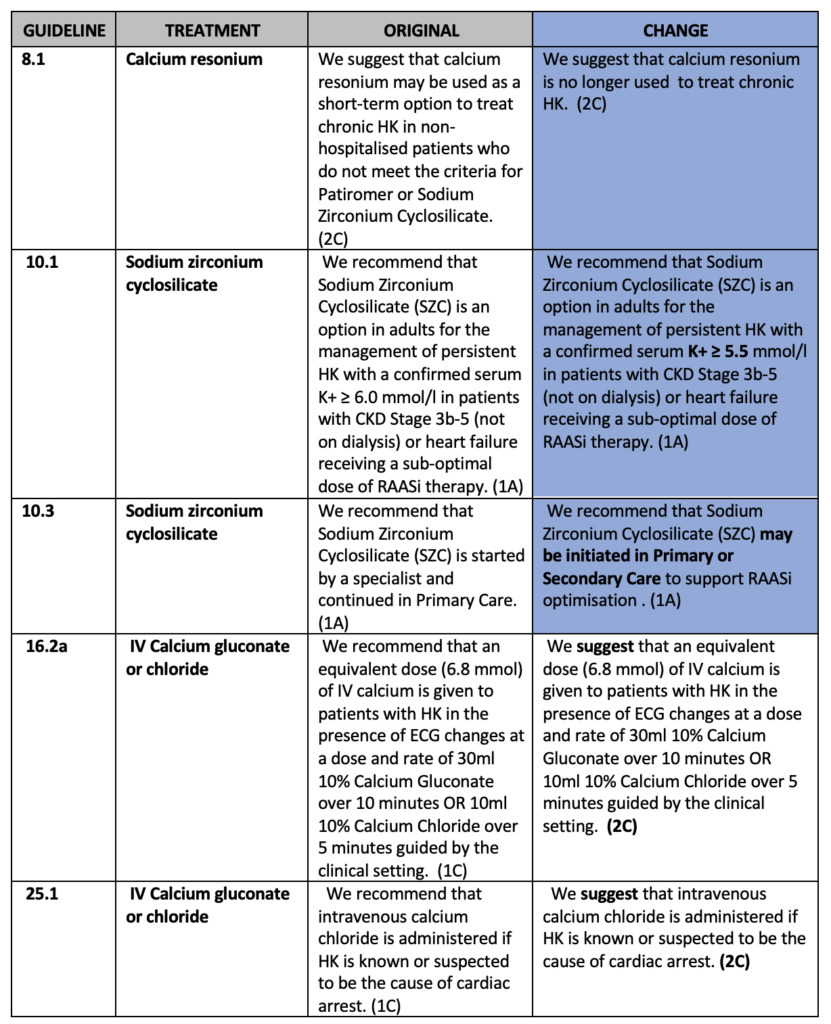
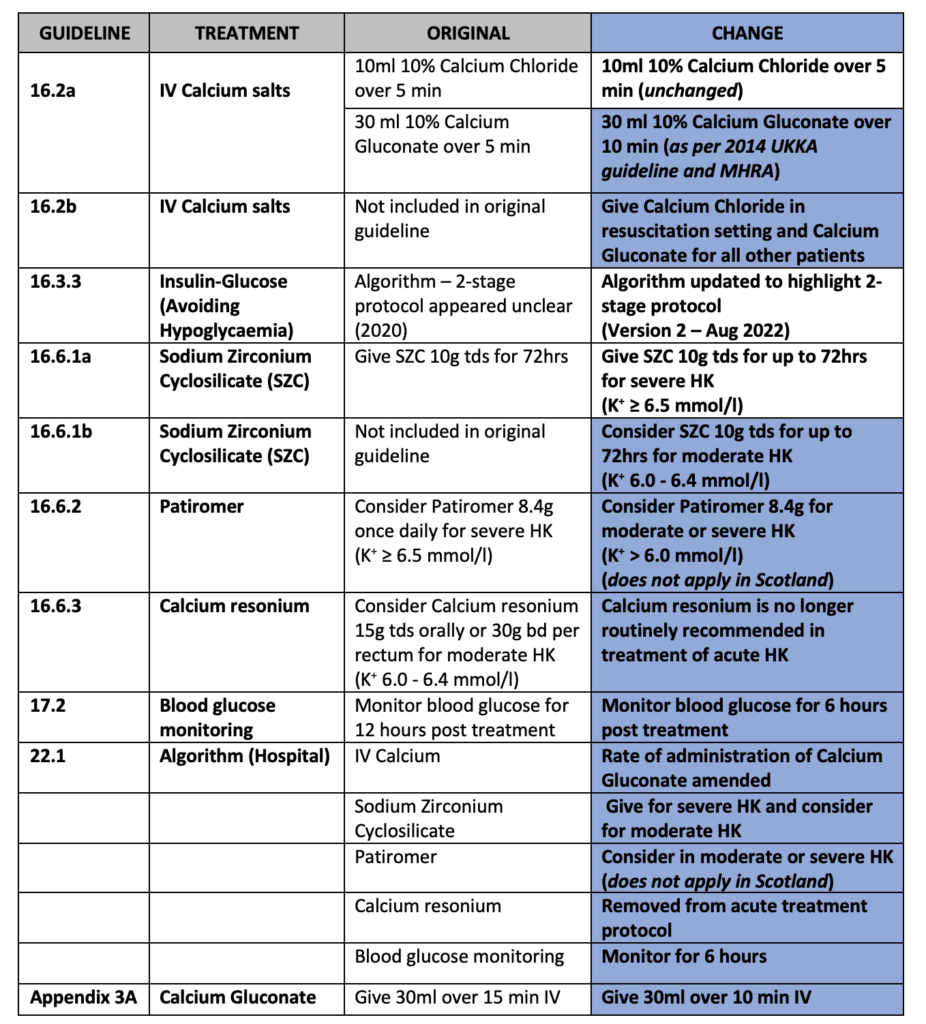
Summary of key changes to Hyperkalaemia Guideline – October 2023
Hyperkalaemia is a medical disorder in which the potassium (K+) level in the blood is raised. The kidneys are largely responsible for removing K+ from the body, therefore the most common cause of hyperkalaemia is impaired kidney function. Some commonly prescribed drugs used to treat heart failure, kidney disease and diabetes mellitus can also contribute to hyperkalaemia, therefore this guideline provides guidance for initiation, monitoring and strategies for dose optimisation to improve patient outcomes.
Hyperkalaemia may be mild (K+ 5.5 – 5.9 mmol/l), moderate (K+ 6.0 – 6.4 mmol/l) or severe (K+ ≥ 6.5
mmol/l). It can occur in the community or in hospitalised patients. Most cases of mild or moderate
hyperkalaemia detected in the community can be managed without the need for hospital admission unless acutely unwell. Severe hyperkalaemia requires urgent hospital assessment as it is potentially lifethreatening. Early recognition and treatment can save lives.
The treatment for hyperkalaemia has evolved in recent years. The UKKA Hyperkalaemia guideline has developed novel strategies to improve patient safety and has incorporated new potassium-lowering drugs.
- The administration of intravenous (IV) calcium is a critical step in the management of severe
hyperkalaemia. In 2014, the UKKA Hyperkalaemia Guideline introduced a new dosing protocol for
IV calcium to ensure an adequate dose is administered in a single dose rather than using a sequential dosing approach. The Medicines and Healthcare Products Regulatory Agency (MHRA) has recently reviewed the dose and method of administration of IV calcium and has endorsed the UKKA recommendation. The MHRA issued a National Patient Safety Alert (June 2023) to raise awareness and has removed the ‘off-label’ use of IV calcium for severe hyperkalaemia. - Insulin and glucose infusion remains the most effective emergency treatment, but the incidence of
hypoglycaemia (low blood glucose) has been unacceptable high. In 2020, the UKKA Hyperkalaemia
Guideline introduced a new strategy to reduce hypoglycaemia in patients most at risk (i.e., patients
with a pre-treatment blood glucose level < 7mmol/l). Since then, multiple studies have confirmed
this threshold thereby making this guidance more robust. Implementation of this strategy is likely
to lower the incidence of hypoglycaemia. - Two new oral potassium lowering drugs (sodium zirconium cyclosilicate and patiromer) have been
approved for specific indications by the National Institute for Health and Care Excellence (NICE).
Since the 2020 UKKA Hyperkalaemia Guideline, these drugs have become an increasingly important
part of emergency management of hyperkalaemia and can also allow optimisation of drug therapy
for heart and kidney disease.
Prevention of hyperkalaemia remains the best approach. This requires patient education and information, careful drug prescribing by medical practitioners, regular blood monitoring and dietary modifications under the guidance of a specialist renal dietician when indicated.