
Guideline 13.1 – Hyperkalaemia: Clinical Assessment; History and examination
We recommend that all patients presenting with hyperkalaemia undergo a comprehensive medical and drug history and clinical examination to determine the cause of hyperkalaemia. (1B)
Guideline 13.2 – Hyperkalaemia: Clinical Assessment; NEWS
We recommend that all patients with known or suspected hyperkalaemia undergo urgent clinical assessment using an early warning scoring system to assess level of acuity. (1C)
Audit measures
Length of hospital stay and in hospital mortality of patients admitted with hyperkalaemia.
Rationale (Guideline 13.1–13.2)
A careful medical history may identify risk factors for hyperkalaemia as shown in Table 10. It is important to elicit any history of pre existing kidney disease and any factors which may contribute to an acute kidney injury (e.g., diarrhoea & vomiting, infection, medications). Apply a high index of suspicion of hyperkalaemia in patients’ groups at risk, e.g. patients with end stage renal failure, diabetes, heart failure or liver failure. Access to electronic patient records and historical biochemical results can help establish baseline renal function.
Symptoms are often non specific and may be overshadowed by the acute illness whilst other patients are asymptomatic.1,2 Muscle weakness and/or paraesthesiae may occur in severe cases and may progress to flaccid paralysis.3 6 Drugs are commonly implicated in the aetiology of hyperkalaemia, therefore a careful record of all medications is essential.2,6 Ask about current medication, recent changes and use of over the counter medications.
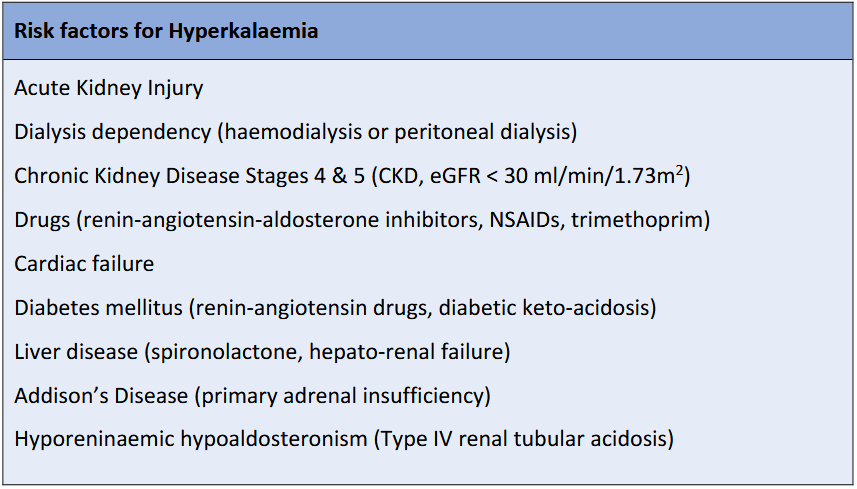
Table 10: Factors associated with an increased risk of hyperkalaemia.
- Acute Kidney Injury
- Dialysis dependency (haemodialysis or peritoneal dialysis)
- Chronic Kidney Disease Stages 4 & 5 (CKD, eGFR < 30 ml/min/1.73m2)
- Drugs (renin angiotensin aldosterone inhibitors, NSAIDs, trimethoprim)
- Cardiac failure
- Diabetes mellitus (renin angiotensin drugs, diabetic keto acidosis)
- Liver disease (spironolactone, hepato renal failure)
- Addison’s Disease (primary adrenal insufficiency)
- Hyporeninaemic hypoaldosteronism (Type IV renal tubular acidosis)
The most significant consequences of hyperkalaemia are arrhythmias and cardiac arrest, therefore early recognition, cardiac monitoring and prompt treatment are essential. Early identification of hyperkalaemia, with or without adverse clinical signs, enables specific interventions, specialist referral (if required) and appropriate escalation of care.
The ABCDE approach is an established method for rapid systematic assessment of the acutely ill patient and allows problems, including hyperkalaemia, to be identified and treated promptly.7 The National Early Warning Score (NEWS) was developed by the Royal College of Physicians,8 and is used to identify acute ill patients.9 Baseline assessment and serial monitoring is essential in identifying patients who are deteriorating and may require escalation of care.
These standardised methods of patient assessment and monitoring improve patient safety and facilitates clear communication about acutely unwell patients.
References
- Alfonzo, A.V.M., et al., Potassium disorders clinical spectrum and emergency management. Resuscitation, 2006. 70(1): p. 10 25.
- Raffee, L.A., et al., Clinical and electrocardiogram presentations of patients with high serum potassium concentrations within emergency settings: a prospective study. Int J Emerg Med, 2022. 15(1): p. 23.
- Bangolo, A.I., et al., How High Can You Get: A Case Report of an Unusual Cause of Ascending Paralysis. Cureus, 2022. 14(1): p. e21236.
- D’Ercole, M., et al., Hyperkalemia induced acute flaccid paralysis: a case report. G Ital Nefrol, 2021. 38(2).
- Rodrigues, R.A., et al., Acute flaccid paralysis due to multifactorial hyperkalaemia. BMJ Case Rep, 2023. 16(6).
- Lindner, G., et al., Acute hyperkalemia in the emergency department: a summary from a Kidney Disease: Improving Global Outcomes conference. Eur J Emerg Med, 2020. 27(5): p. 329 337.
- Thim, T., et al., Initial assessment and treatment with the Airway, Breathing, Circulation, Disability, Exposure (ABCDE) approach. Int J Gen Med, 2012. 5: p. 117 21.
- National Early Warning Score (NEWS) 2. Royal College of Physicians. December 2017. www.rcplondon.ac.uk/projects/outputs/national early warning score news 2.
- National Institute for Health and Care Excellence. Acutely Ill Adults in hospital: recognising and responding to deterioration. Clinical guideline 50. July 2007 (updated April 2019). www.nice.org.uk/guidance/cg50.