
II. Hyperkalaemia in Hospitalised Patient (Guidelines Hyperkalaemia 21.1 – 21.4)
Guideline 21.1 – Hyperkalaemia: Prevention of hyperkalaemia in hospitalised patients
We recommend that the need for prescribed medication which can cause hyperkalaemia are reviewed in the context of the current illness and level of renal function both on and during hospital admission. (1B)
Guideline 21.2 – Hyperkalaemia: Prevention of hyperkalaemia in hospitalised patients
We recommend dietary strategies to modify potassium intake for hospitalised patients with moderate or severe hyperkalaemia after non dietary causes of hyperkalaemia (constipation, acidosis and poorly controlled diabetes) have been addressed. (1C)
Guideline 21.3 – Hyperkalaemia: Prevention of hyperkalaemia in hospitalised patients
We recommend that community blood monitoring is arranged on discharge for all patients who have required treatment for hyperkalaemia during hospital admission. (1B)
Guideline 21.4 – Hyperkalaemia: Prevention of hyperkalaemia in hospitalised patients
We recommend that the risk of recurrence of hyperkalaemia is considered before reinstating previous medication that may have contributed to the episode. (1B)
Audit Measures
The frequency of hyperkalaemia developing beyond 24 hours of hospital admission.
- The frequency of prescribed drugs potentially contributing to hyperkalaemia.
Rationale (Guideline 21.1 – 21.4)
The NCEPOD Report (2009), ‘Adding Insult to Injury’, highlighted the risk of AKI in acute hospital admissions.1 Acute illness (e.g. sepsis, diarrhoea and vomiting) with systemic hypotension can result in AKI with hyperkalaemia which may be present at the time of hospital admission. Clinicians should be alert to the potential development of hyperkalaemia in the context of intercurrent illness in patients receiving drugs known to exacerbate hyperkalaemia. Early recognition and treatment of AKI can reduce morbidity and mortality.
Hyperkalaemia often occurs after hospital admission. A study of in patients with hyperkalaemia showed that 33.3% of cases developed after hospital admission.2 Most cases were mild, but 15.4% were moderate or severe (K+ ≥ 6.0 mmol/L). AKI was present in 73% of cases with a pre renal cause in half of these. Prescribed medication was implicated in 76% of patients receiving potentially hyperkalaemia inducing drugs (e.g. RAASi) and 55% of these patients were taking two or more of such medications.2 The severity of hyperkalaemia was also found to correlate (p< 0.01) with the number of potentially hyperkalaemia inducing drugs used concurrently. Medications frequently implicated in hyperkalaemia are summarised in Table 32.
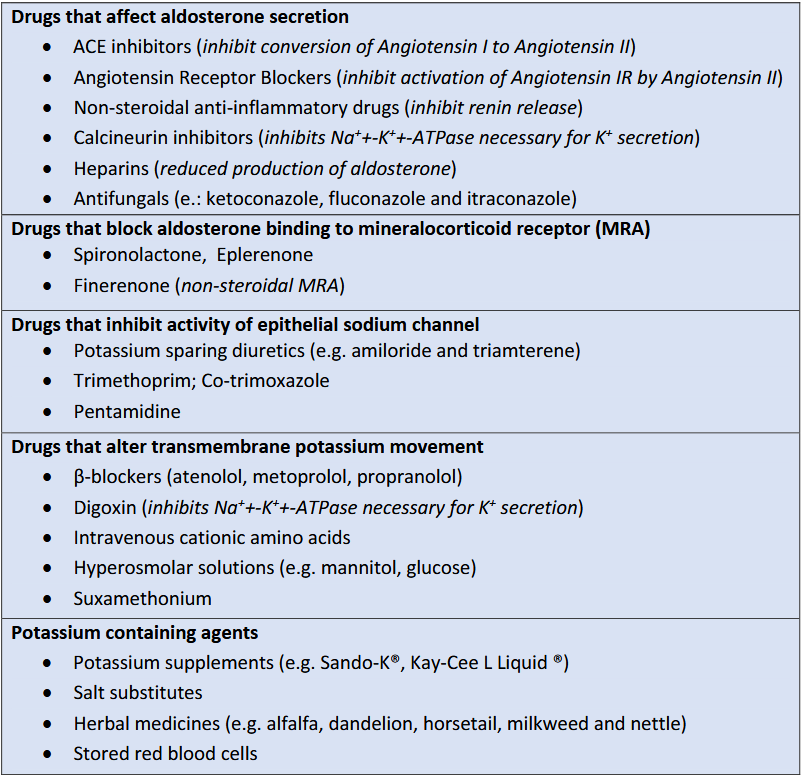
Table 32: Drugs commonly associate with hyperkalaemia and mechanisms.
Primary Prevention
These are steps taken to avoid an initial episode of hyperkalaemia.
Non dialysis Patients:
- Regular blood monitoring for patients at risk (e.g. CKD, heart failure, diabetes, any patient taking RAASi or MRA)
- Address modifiable factors:
- Avoid drug combinations that potentiate hyperkalaemia (e.g. ACE I and Trimethoprim)
- Correct acidosis
- Avoid constipation
- Optimise diabetic control
- Dietary modifications: seek specialist dietary advice in patients with CKD 4 & 5
- Anticipate risk of hyperkalaemia during acute illness
- Sick day rules – withhold drugs that may contribute to hyperkalaemia
- Consider who is at risk at time of hospital admission
- Consider need to withhold drugs that potentiate hyperkalaemia during admission
Dialysis Patients:
- Regular blood monitoring
- Address modifiable factors:
- Avoid prolonged fasting – give 5% Glucose infusion
- Avoid constipation
- Optimise diabetic control
- Dietary modifications (guided by specialist dietician)
- Address dialysis related factors:
- Maintain good dialysis access, optimise adequacy, and minimise re circulation
- K+ binders – potential role to bridge if dialysis delayed (e.g. access problems)
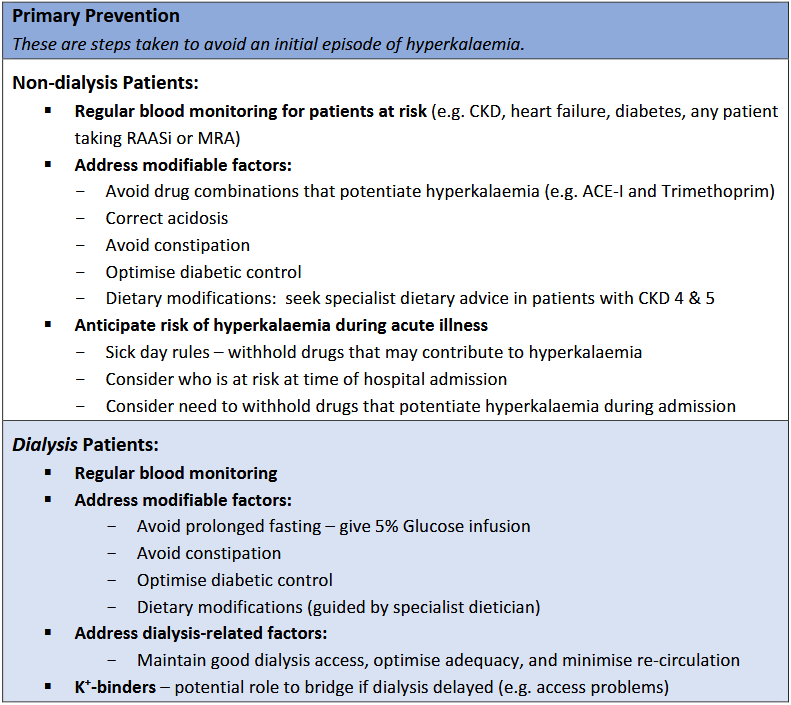
Table 33: Primary prevention of hyperkalaemia in non dialysis and dialysis patients.
Secondary Prevention
These are steps taken to avoid recurrence of hyperkalaemia after an episode.
Non dialysis Patients:
- As above
- If a K+ binder is started during an acute episode in hospital, watch for recurrence of hyperkalaemia when binder discontinued
- For chronic hyperkalaemia, consider a K+ binder (SZC or Patiromer) if patient meets NICE criteria (K+ 6.0 mmol/l, heart failure or CKD 3 5/non dialysis, on RAASi)
- Consider diuretic in patients with heart failure or CKD, particularly if volume overloaded
- Sick day rules – ensure patient aware of guidance
Dialysis Patients:
- As above
- Increase frequency of blood monitoring (vigilance if high likelihood of recurrence)
- K+ binders – potential role for chronic hyperkalaemia if other strategies fail
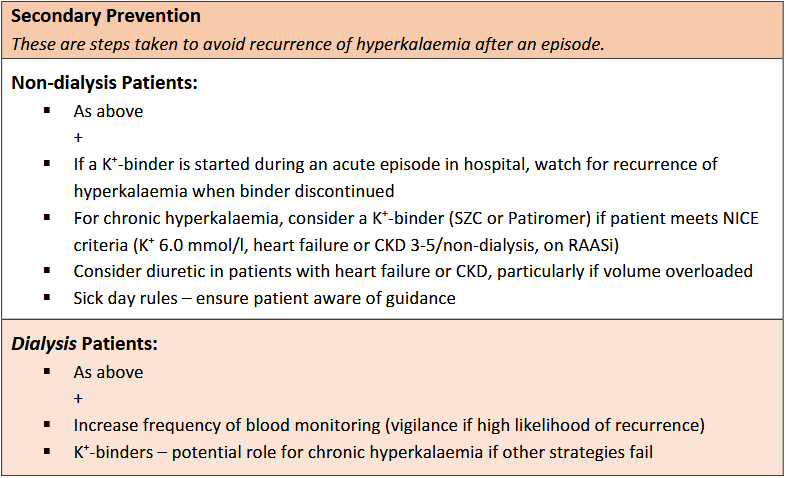
Table 34: Secondary prevention of hyperkalaemia in non dialysis and dialysis patients.
References
- National Confidential Enquiry into Patient Outcome and Death. Adding Insult to Injury. 2009. www.ncepod.org.uk
- de Sequera, P., et al., Hyperkalaemia in hospitalised patients. How to avoid it? Nefrologia, 2014. 34(3): p. 417 9.
- Robert, L., et al., Hospital Acquired Hyperkalaemia Events in Older Patients Are Mostly Due to Avoidable, Multifactorial, Adverse Drug Reactions. Clin Pharmacol Ther, 2019. 105(3): p. 754 760.
- Furlund, H., et al., Recurrent Hyperkalaemia and Association with Length of Stay and Mortality Following Hospitalisation: Real World Evidence from UK Patients with Ckd. Nephrology Dialysis Transplantation, 2018. 33: p. 157 157.
- Saito, Y., et al., Incidence of and risk factors for newly diagnosed hyperkalemia after hospital discharge in non dialysis dependent CKD patients treated with RAS inhibitors. PLoS One, 2017. 12(9): p. e0184402.
- Think Kidneys: When or if to re start ACEI, ARB, diuretics and other antihypertensive drugs after an episode of acute kidney injury. 2018. www.thinkkidneys.nhs.uk/aki/wp content/uploads/sites/2/2018/11/Nov 18 restarting diuretics
- Wetmore, J.B., et al., Development and outcomes of hyperkalemia in hospitalized patients: potential implications for care. Am Heart J, 2021. 241: p. 59 67.
- Qiao, Y., et al., Discontinuation of Angiotensin Converting Enzyme Inhibitors and Angiotensin Receptor Blockers in Chronic Kidney Disease. Mayo Clin Proc, 2019. 94(11): p. 2220 2229.
- Trevisan, M., et al., Stopping mineralocorticoid receptor antagonists after hyperkalaemia: trial emulation in data from routine care. Eur J Heart Fail, 2021. 23(10): p. 1698 1707.