
5g.1 Background and Evidence Review: Mycotic Genital Infections
SGLT 2 inhibitors reduce blood glucose in individuals with DM by causing urinary excretion of glucose (65). The presence of an increased concentration of glucose in the urine results in a 2.5-6-fold increase in the risk of mycotic genital infections in those on an SGLT 2 inhibitor compared to control (66-68). In women, this presents as candida vulvovaginitis and in men as balanitis.
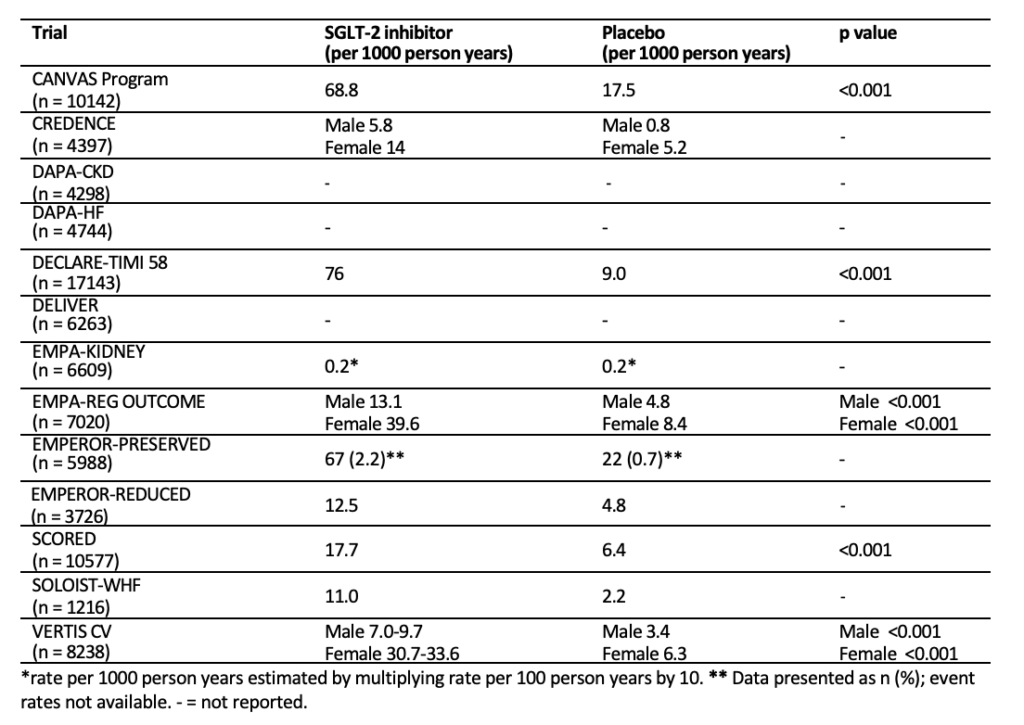
The large placebo-controlled trials reported an increased incidence of mycotic genital infections in the SGLT 2 inhibitor treatment arms compared to placebo (Table 5g.1)
Table 5g.1 Mycotic genital infections in SGLT 2 inhibitor trials
People with type 2 DM are at an increased risk of recurrent mycotic genital infections compared with the general population. Given this increased incidence, propensity to mycotic genital infection is an important consideration prior to initiation of SGLT 2 inhibitors. Factors which may predispose an individual to mycotic genital infection include female sex, pregnancy, hormonal contraception, recent antibiotic use, and immunosuppression. People with DM not achieving their HbA1c target may be immunosuppressed as hyperglycaemia has effects on the immune system resulting in an increased susceptibility to infection (69).
When these risks factors are considered together in multivariate models, female gender, higher BMI and previous genital infections are independently associated with a greater risk of mycotic genital infections, whilst a high HbA1c is not consistently associated with greater risk (70, 71). Development of mycotic genital infections is a common reason to stop SGLT 2 inhibitors, particularly if they occurred early after treatment initiation (72). Counselling on the risks and prevention of mycotic genital infections may help improve adherence.
Prevention
Prevention comes mainly in the form of managing risk factors. Personal hygiene education has been shown to reduce incidence of genital infection in a small study of 250 people where 5% of participants who were advised on personal hygiene developed a genital infection compared to 41% of those in the control group. Personal hygiene strategies include rinsing after voiding (but not douching), loose-fitting absorbent underwear and cleaning under foreskin (73).
Treatment
Despite good preventative measures, some individuals may still develop mycotic genital infections. Prescribing guidance suggests discontinuation of the SGLT 2 inhibitors is not necessary (74). People can self- manage with over the counter treatments or be prescribed appropriate antifungal therapy such as topical creams or a single dose of an oral antifungal (73). For those with recurrent infections, prophylactic or maintenance therapy is suggested (73).
5g.1.2 Background and Evidence Review: Fournier’s Gangrene
Fournier’s gangrene is an acute polymicrobial infection of the scrotum, penis or perineum with necrosis. It presents with scrotal or perineal pain and redness and has a rapid progression to gangrene (with pain being a key feature). Treatment is surgical debridement and broad-spectrum intravenous antibiotics. It is rare, with an overall incidence of about 1.6 per 100,000/year (75). The large placebo-controlled trials of SGLT 2 inhibitors have reported only a few cases of Fournier’s gangrene, with no suggestion of an increased incidence in the SGLT 2 inhibitor treatment arms compared to placebo (3).
The MHRA advised of a risk of developing Fournier’s gangrene whilst treated with SGLT 2 inhibitors in February 2019, following an EU review and an FDA safety announcement (76). Six yellow card reports were received corresponding to 548,565 person years of treatment. Warnings have been added to product information and letters were sent to health professionals. These warnings advise that people should be informed of the signs and symptoms and when to seek help. In particular, they should be advised to be alert for symptoms of severe pain, tenderness, erythema, or swelling in the genital or perineal area accompanied by fever or malaise. In addition, people on SGLT 2 inhibitors should be advised to stop their treatment on suspicion of Fournier’s gangrene and treatment started urgently.
5g.2 Recommendations for Implementation
- We recommend that all people are counselled on the risks of mycotic genital infections prior to initiation of SGLT 2 inhibitors (Grade 1D).
- We recommend that all people are counselled on self-care to maintain good genital hygiene (Grade 1C).
- We recommend that all people are counselled on the symptoms of mycotic genital infections and how to seek help including self-management (Grade 1D).
- We suggest that for those individuals with a history of recurrent mycotic genital infections on SGLT 2 inhibition, consideration is given to offering prophylactic anti-fungal treatment, which should be reviewed after 6 months of therapy or earlier if clinically indicated (Grade 2D).
- We suggest that SGLT 2 inhibitor therapy can be continued during the treatment of mycotic genital infections (Grade 2D).
- We highlight the specific MHRA warning and suggest that all people are counselled on the symptoms of Fournier’s gangrene and advised to stop SGLT 2 inhibitors and to seek urgent help if they develop such symptoms (Grade 2D).
Rationale: Mycotic genital infections are recognised to occur more frequently in people treated with SGLT 2 inhibitors (on average risk is about 3-4-fold higher) and particularly in those individuals with DM. These infections are usually mild and easily treated. Good clinical care should include ensuring that individuals prescribed SGLT 2 inhibitors are aware of this complication, how to reduce the risk of it occurring and appropriate actions should they develop symptoms consistent with mycotic genital infections. In contrast to mycotic genital infections, Fournier’s gangrene is a rare condition that results from bacterial infection and it requires prompt and intensive medical and surgical management. This disorder is identified in people with DM and whilst the evidence to suggest that it may be increased in people treated with SGLT 2 inhibitors is limited to post-marketing surveillance, all people starting SGLT 2 inhibitors should be advised on the symptoms of Fournier’s gangrene and what to do if they develop such symptoms.