
All medications have both beneficial and adverse effects. This section is designed to highlight the key adverse effects identified to result from use of sodium glucose co-transporter-2 (SGLT-2) inhibitors and guide how these medicines can be initiated and continued safely, minimising the risk of harm.
Since the publication of the 2021 version of the UKKA guidelines for use of SGLT-2 inhibition, findings from two large randomized controlled trials (EMPA-KIDNEY (1) and DELIVER (2)) and an updated meta-analysis (3) have been reported, providing important new information on the efficacy and safety of SGLT-2 inhibition among people with chronic kidney disease (CKD).
A summary of absolute benefits and risks of SGLT-2 inhibition in people with CKD with or without diabetes recruited into the CKD trials of SGLT-2 inhibitors are presented in the collaborative meta-analysis co-authored by the Nuffield Department of Population Health Renal Studies Group (RSG) and the SGLT-2 Inhibitor Meta-Analysis Cardio-Renal Trialists Consortium (SMART-C) (3). This summary, which presents absolute effects of SGLT-2 inhibition on kidney disease progression, hospitalisation for heart failure or death from cardiovascular causes, acute kidney injury, ketoacidosis, and amputation, is presented below. Importantly, the benefits of SGLT-2 inhibitors in terms of cardiovascular and renal outcomes consistently outweigh the risks of amputation or ketoacidosis among the types of people with CKD studied in the completed trials to date (3). A more detailed summary of evidence for the safety outcomes will be discussed this section.
Figure 5.1: Absolute benefit and risks of SGLT-2 inhibition for people with CKD with and without diabetes, estimated from 13 large randomized clinical trials of SGLT-2 inhibition (adapted from (3)).
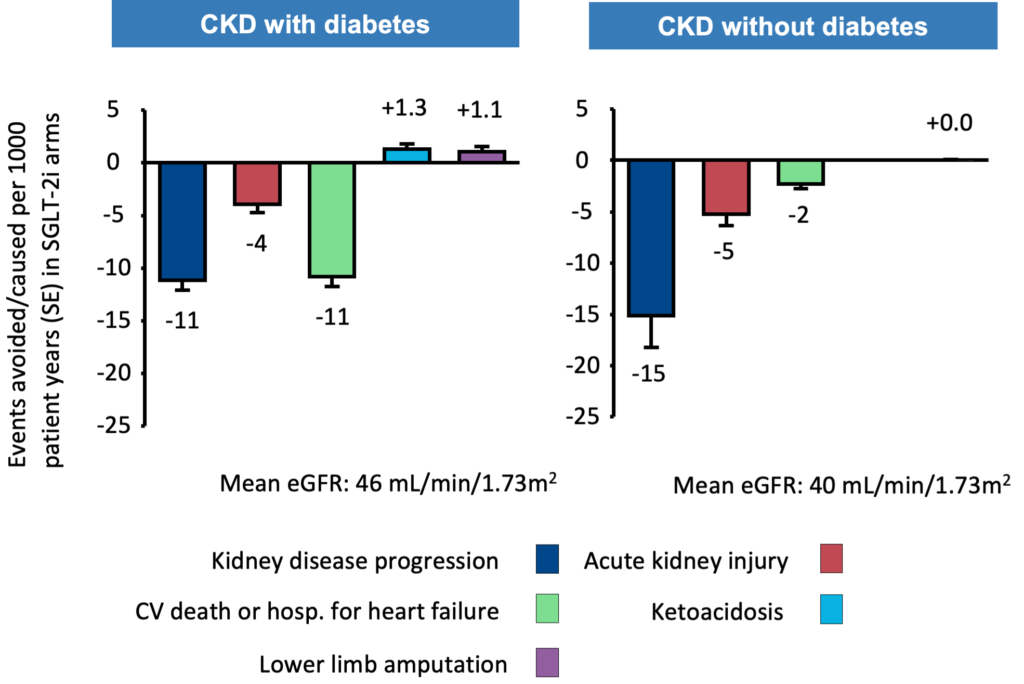
CKD – chronic kidney disease. eGFR – estimated glomerular filtration rate. SE – standard error. SGLT-2i – sodium-glucose co-transporter 2 inhibitor.