
2.1.1 2023 update to guideline
Since publication of the 2021 version of this guideline, two large trials of SGLT 2 inhibition have been reported (1, 2), including the EMPA-KIDNEY trial (1). The guidelines have been reviewed and revised in light of the new data.
2.1.2 Summary of trial evidence on kidney disease progression
The ‘Recommendations for Use’ covered in this section are evidence-based where sufficient data is available, with a focus on large, high-quality randomised trials. Of particular importance are the three reported ‘kidney outcome trials’ with specifically address the use of SGLT 2 inhibition to reduce progression of kidney disease in a population with CKD (CREDENCE, DAPA-CKD, and EMPA-KIDNEY (1, 3, 4)). All three of these trials investigated a primary outcome comprising a composite of death from cardiovascular causes, death from kidney failure (i.e. renal death), or progression of kidney disease. The latter component of the composite outcome has been variably defined in trials, but consistently combined end-stage kidney disease (ESKD; defined as initiation of maintenance dialysis, kidney transplantation) and eGFR-based components. Categorical outcomes based on eGFR decline have been shown to be valid surrogate markers for progression to kidney failure, supporting their use in the large SGLT 2 inhibitor trials (5, 6). However, for some trial participants in whom the rate of kidney disease progression is expected to be low, categorical assessments of decline in kidney function may fail to detect meaningful differences between SGLT 2 inhibition and placebo, particularly in the context of randomised trials of relatively short duration. For this reason, eGFR slope analyses have been reviewed alongside the categorical outcomes to ensure the totality of the available information on effects on kidney outcomes is considered. Note that in CKD, methods for eGFR slope analyses have been reviewed with regulators and shown to be potentially valid surrogates for kidney disease progression. Absolute differences in the order of 0.5 to 1 mL/min/1.73m2 per year have been shown to predict a hazard ratio of at least 0.70 on kidney disease progression (7).
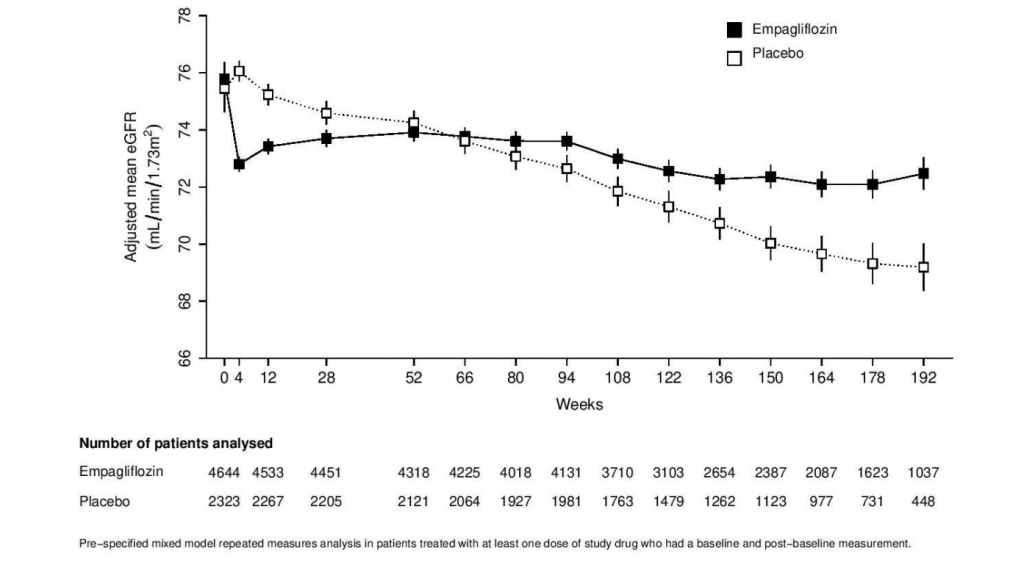
The first clear demonstration of the potential for SGLT 2 inhibitors to modify risk of CKD progression was based on these categorical outcomes and emerged from a sub-analysis of the EMPA-REG OUTCOME trial in a type 2 DM population with prior cardiovascular disease. Initial analyses plotting mean eGFR against time showed a modest reversible reduction in eGFR on initiating SGLT 2 inhibition compared to placebo, followed by a substantial decrease in the subsequent rate of chronic eGFR decline over time (Figure 2.1). The retardation of eGFR decline brought about a 46% reduction in the risk of the categorical composite kidney disease progression outcome of ESKD, renal death, and a doubling of serum creatinine (hazard ratio [HR]=0.54, 95% confidence interval [CI] 0.40-0.75) (8). Subsequent trials have confirmed these findings, with information on renoprotection now available from trials conducted in a range of different types of people with several different SGLT 2 inhibitors.
Figure 2.1: Effect of allocation to empagliflozin 10 or 25mg versus placebo on CKD-EPI eGFR by time in EMPA-REG OUTCOME (reproduced from(9))
Kidney disease progression results from CREDENCE & DAPA-CKD & EMPA-KIDNEY
Table 2.1: Kidney characteristics of people with DM in CREDENCE (3) and DAPA-CKD (4), and EMPA-KIDNEY (1)

All three dedicated CKD trials were stopped early for efficacy by their respective data monitoring committees. In the CREDENCE trial, canagliflozin reduced the risk its primary composite outcome, defined as a sustained doubling of creatinine, ESKD, or death from renal or cardiovascular causes, by 30% compared to placebo (245/2202 vs 340/2199: HR=0.70, 95%CI 0.59-0.82). Importantly, there were reductions in the risk of kidney disease progression, including ESKD. Risk of receipt of maintenance dialysis, kidney transplantation or a renal death was significantly reduced by 28% (3). These benefits were unmodified by baseline level of eGFR and glycosylated haemoglobin (HbA1c). Figure 2.2 provides the effects on the kidney disease progression component of the primary outcome for CREDNCE and the other CKD progression trials, split by diabetes status.
DAPA-CKD demonstrated a reduction in the primary composite outcome, defined as a sustained 50% decline in eGFR, ESKD, or death from renal or cardiovascular causes, by 39% with dapagliflozin compared to placebo (197/2152 vs 312/2152: HR=0.61, 95%CI 0.51-0.72). Importantly, these relative risks were again apparent for the kidney disease progression component of the primary composite (see Figure 2.2), and ESKD. They were also similar when analyses were performed separately in people with and without type 2 DM, and in pre-specified subgroups defined by eGFR and uACR (4). There was also a clear reduction in risk of kidney disease progression, with fewer initiations of maintenance dialysis overall and among those with DM considered in isolation. DAPA-CKD therefore reinforced the findings on albuminuric diabetic kidney disease from CREDENCE (3).
Figure 2.2: Effects of SGLT 2 inhibitors on kidney disease progression by population (adapted from (11))
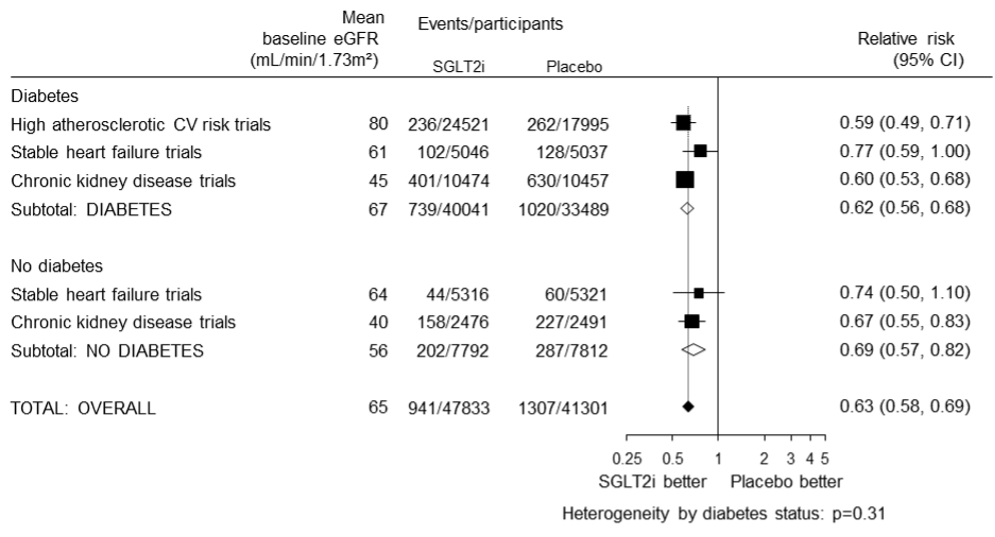
Kidney disease progression was defined as a sustained ≥50% decline in eGFR from randomisation, kidney failure, or death from kidney failure. Data not available for SOLOIST-WHF.
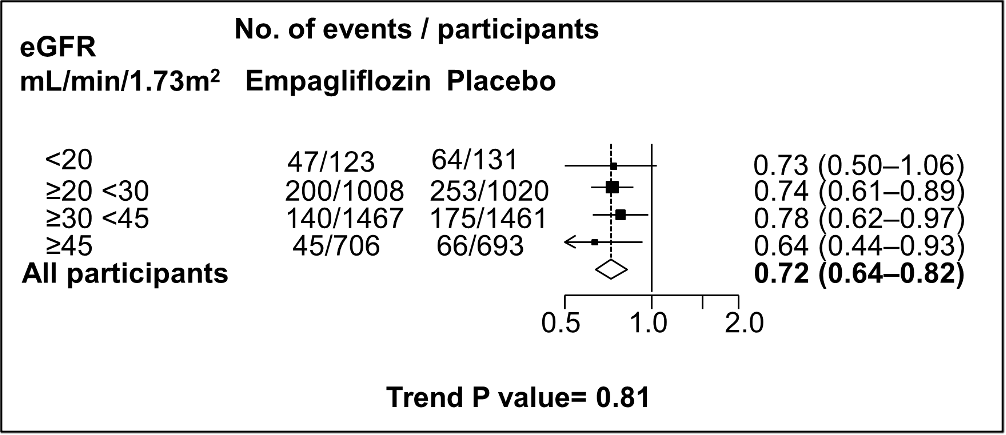
EMPA-KIDNEY reported a reduction in the primary outcome, defined as a composite of progression of kidney disease (defined as end-stage kidney disease, a sustained decrease in eGFR to <10 mL/min/1.73m2, a sustained decrease in eGFR of ≥40% from baseline, or death from renal causes) or death from cardiovascular causes, by 28% (432/3304 vs 558/3305, HR=0.72, 95%CI 0.64-0.82) (1). As with CREDENCE and DAPA-CKD, similar effects were observed for the subcomponents of kidney disease progression including a significant reduction in a secondary composite outcome of ESKD or death from cardiovascular causes. The relative effects on the primary outcomes were broadly similar in people with and without diabetes and across the spectrum of eGFR studied, with no evidence any attenuation of effect even in the post-hoc subgroup analyses including 111 primary outcomes in 254 participants with an eGFR below 20 (see Figure 2.5 below). There was evidence, however, that the effect on primary outcome was larger in participants with a higher baseline levels of uACR (p-value for trend = 0.02). There were few kidney disease progression events in people with lesser degrees of albuminuria, particularly those with normoalbuminuria due to their slower rate of progression, and exploring pre-specified eGFR-slope-based analyses was important to help interpret these subgroup findings and identify slowing of progression in those with lower levels of uACR (see below).
Figure 2.3: Effects of SGLT 2 inhibition on kidney disease progression by primary kidney diagnosis (adapted from (11))
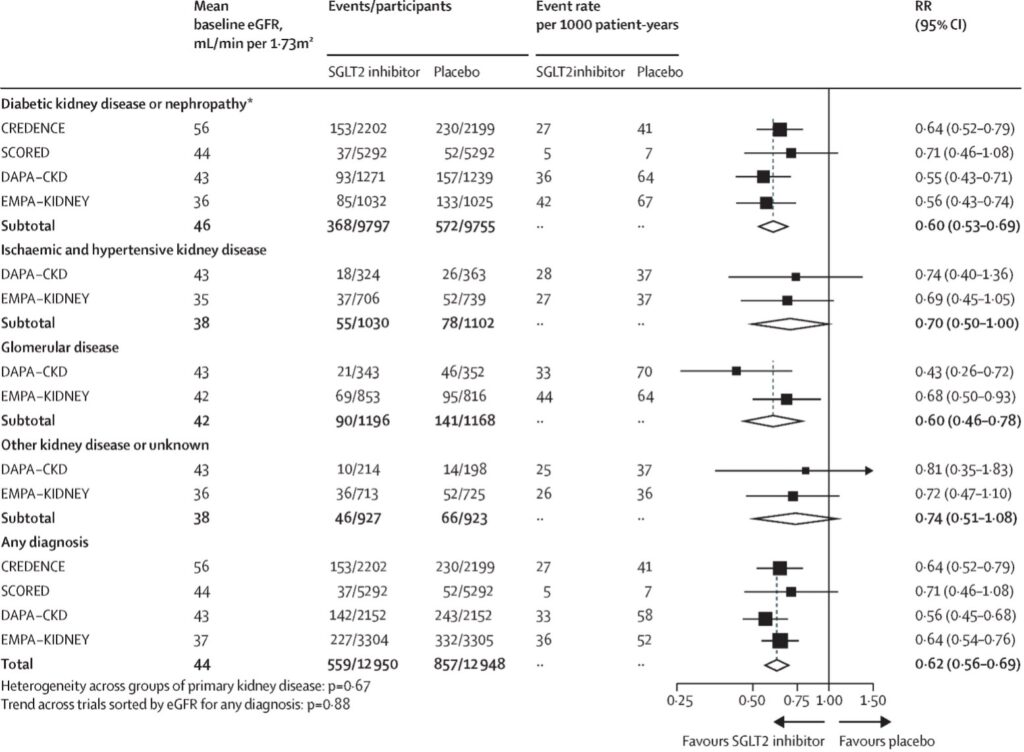
*RR in the diabetic kidney disease or nephropathy subgroup excluding SCORED (which did not formally assess primary kidney disease) is 0.59 (95% CI 0.52–0.68).
Kidney disease progression results from trials including people without albuminuria
Figure 2.4: Effects of empagliflozin versus placebo on the rate of eGFR decline in EMPA-KIDNEY, by key subgroups at baseline (adapted from (1))
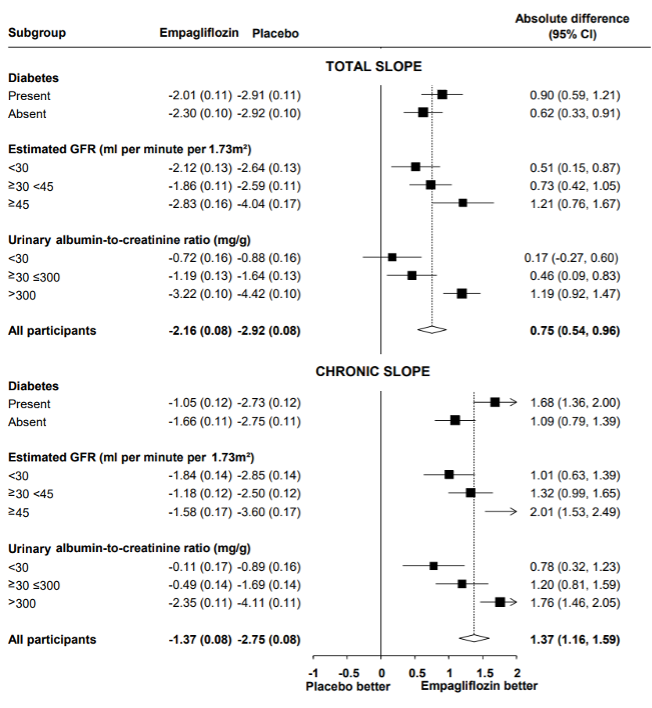
Mean annual rate of change in eGFR (mL/min/1.73m2/year) from baseline to final follow-up visit (“total slope”) and from two months to final follow-up visit (“chronic slope”).
More data in people with low levels of albuminuria are available from the heart failure trials (some of which prespecified eGFR slope analyses as secondary outcomes). eGFR slope analyses from the EMPEROR program, DAPA-HF and DELIVER suggest that the renoprotective effects of SGLT-2 inhibition extend to heart failure populations (13-16). In EMPEROR-REDUCED, the rate of decline in eGFR was reduced by 1.73 mL/min/1.73m2 per year, and was similar across the spectrum of uACR categories, though this analysis included participants with and without CKD (14). Rate of eGFR decline was attenuated with empagliflozin in participants both with and without CKD. Both EMPEROR-PRESERVED and DELIVER demonstrated a significant reduction in rate of eGFR decline in the SGLT-2 inhibitor group vs placebo (difference in total eGFR slope for EMPEROR-PRESERVED: 1.36 mL/min/1.73m2 per year, 95%CI 1.06-1.66; DELIVER: 0.5 mL/min/1.73m2, 95%CI 0.1-0.9 [chronic slope analyses not presented]) (13, 17). In both trials the absolute numbers of categorical kidney disease progression outcomes was low (152/6262 in DELIVER, 220/5988 in EMPEROR-PRESERVED), and given the slow rate of progression in the trial cohorts, the duration of follow up may have been too short for meaningful differences between treatment groups to emerge (median follow up of 21 and 28 months in EMPEROR-PRESERVED and DELIVER, respectively).
Kidney disease progression in people with eGFR <20 mL/min/1.73m2 and on maintenance dialysis
EMPA-KIDNEY, DAPA-CKD and CREDENCE enrolled participants with eGFR ≥20, ≥25, and ≥30 mL/min/1.73m2, respectively (1, 3, 4). However, in these trials treatment with SGLT-2 inhibitor (or placebo) was continued at least until initiation of kidney replacement therapy (initiation of maintenance dialysis or kidney transplantation), providing indirect evidence regarding the safety of SGLT-2 inhibition among people with eGFR <20 mL/min/1.73m2. Furthermore, in EMPA-KIDNEY a number of participants with eGFR ≥20 at screening visit experienced further decline in eGFR between screening and randomization. In total, 254 participants in EMPA-KIDNEY were randomized with an eGFR between 15-20 mL/min/1.73m2. In an exploratory post-hoc analysis, the hazard ratio for the primary cardiorenal outcome among participants at all strata of eGFR, including 111 events among those with eGFR <20 mL/min/1.73m2, was of a similar magnitude to the overall effect estimate, with no evidence that the relative benefits of empagliflozin attenuated to any degree among people with low eGFR <20 (P value for trend=0.81; Figure 2.5) (1, 18). There is no evidence of an eGFR threshold below which kidney benefits start to attenuate down to CKD stage 5. Importantly, people with markedly decreased eGFR are likely to be at highest absolute risk of kidney failure (indeed, in EMPA-KIDNEY approximately one-half of placebo-treated participants with eGFR<20 mL/min/1.73m2 experienced a primary outcome). Therefore initiating SGLT2 inhibitors in people with CKD with an eGFR <20 would be expected to yield larger absolute benefits at a population level than treating people with higher eGFR (for a given level of albuminuria). Even among people with slow rate of progression of CKD (such as those without significant albuminuria), treatment of those with low eGFR with SGLT-2 inhibition may delay the onset of kidney failure if used over years. Given the presence of an acute dip in eGFR following initiation of SGLT-2 inhibition, some caution is advised in people who are about to need kidney replacement therapy.
The CKD trials generally discontinued SGLT-2 inhibitors after receipt of a kidney transplant (see Section 7b for further details on the use of SGLT-2 inhibition in people with a kidney transplant). DAPA-CKD, which permitted participants to continue dapagliflozin after initiation of chronic maintenance dialysis, presented data on 167 participants on maintenance dialysis, in whom mortality rate was much greater than the non-dialysis population, and numerically lower with dapagliflozin treatment than placebo (19). There is currently insufficient data to make recommendations on the use of SGLT-2 inhibition in people receiving maintenance dialysis. The large RENAL-LIFECYCLE trial (NCT05374291) will investigate the use of dapagliflozin vs placebo for prevention of death, kidney failure or hospitalisation for heart failure in people with kidney failure, maintenance dialysis, or kidney transplantation and will provide further information on the use of SGLT-2 inhibition in this population (20).
Figure 2.5: Effects of empagliflozin versus placebo on the primary outcome of EMPA-KIDNEY, by baseline eGFR (post-hoc analysis)
Acute kidney injury
Given the mechanisms of action of SGLT-2 inhibitors, including the acute decline of eGFR on initiation and induction of osmotic diuresis and natriuresis, early concerns were raised regarding risk of acute kidney injury (AKI) in people treated with SGLT-2 inhibition. However, such concerns were not borne out of trial evidence, which consistently provided reassuring data on the risk of AKI. No individual trial demonstrated increased risk, and several early trials among people with diabetes at high cardiovascular risk suggested a lower rate of AKI events among SGLT-2 inhibitor-treated participants (8, 21). This has been confirmed by meta-analyses, including the RSG and SMART-C meta-analysis, which showed that SGLT-2 inhibition reduces the risk of AKI by about a quarter (HR=0.77, 95%CI 0.70-0.84), irrespective of diabetes status (11, 22). While the mechanism underlying renoprotection in the context of AKI is not fully understood, these beneficial effects may in part explain some of the benefits of SGLT-2 inhibition on progression of kidney disease. Section 5 discusses the evidence regarding acute kidney injury with SGLT-2 inhibition in more detail.
Co-prescription with mineralocorticoid receptor antagonism
There is likely to be increasing use of MRA in people with albuminuric CKD and type 2 diabetes due to recent positive results from finerenone trials and updated guideline recommendations. FIDELIO-DKD demonstrated the efficacy of finerenone compared to placebo at reducing risk of kidney progression in people with albuminuric diabetic kidney disease and type 2 DM, while the complementary FIGARO-DKD trial demonstrated cardiovascular benefits (primarily driven by reduced hospitalisation for heart failure) among people with CKD and diabetes with moderately or severely increased levels of albuminuria and preserved eGFR (23, 24). A European Society of Cardiology position paper has recommended early use of SGLT-2 inhibition in people with heart failure with reduced ejection fraction (HFrEF) in addition to class IA recommended medications (i.e. beta-blockers, ACEi/ARBs and MRAs) (25), and 2022 KDIGO guidelines for the management of type 2 diabetes in CKD now suggest initiation of a non-steroidal MRA in people with albuminuric CKD (26).
There are limited data regarding co-prescription of SGLT-2 inhibition and MRAs in the large trials of CKD. CREDENCE excluded use of MRA at baseline (3), while only 229 (5.3%) participants of DAPA-CKD were co-prescribed an MRA (27). In DAPA-CKD, MRA use did not modify the effects of SGLT-2 inhibition on kidney disease progression outcomes or risk of hyperkalaemia (27). Similarly, univariable subgroup analyses by baseline MRA co-prescription from several of the non-CKD trials have found that MRA use did not modify the key findings from these trials (12, 28-34).
Hyperkalaemia may result from use of MRA, but combining SGLT-2 inhibition with renin-angiotensin-system (RAS) blockade does not have the same potential as dual RAS blockade to cause hyperkalaemia (3, 4, 36, 37). This also appears true in people co-prescribed MRA with SGLT-2 inhibitors (31-33, 38). Data from individual trials and meta-analyses raise the hypothesis that SGLT-2 inhibition may reduce the risk of serious hyperkalaemia (32, 33, 38).
The knowledge gap regarding the safety of co-prescription of finerenone and SGLT-2 inhibition in CKD will be addressed by the ongoing phase 2 CONFIDENCE trial, which is planned to randomise around 800 people with albuminuric CKD to finerenone, empagliflozin, or their combination (with matching placebos as necessary) (35). The primary efficacy outcome will be change in uACR from baseline to 180 days (in combination therapy group vs empagliflozin and finerenone, respectively), with secondary and safety outcomes including the total number of AKI events and total number of hyperkalaemia events on treatment. The trial, which is expected to complete in 2024, will provide important safety information to support combination therapy with SGLT-2 inhibition and non-steroidal MRAs.
2.1.3 Summary of trial evidence on cardiovascular risk
Heart Failure
Randomized clinical trials and meta-analyses have consistently shown that SGLT-2 inhibition reduces cardiovascular death or hospitalization for heart failure across the studied populations, including people with type 2 diabetes at high risk of atherosclerotic cardiovascular disease (11, 21, 39, 40), people with heart failure across the spectrum of ejection fraction (2, 11, 16, 17, 41), and in CKD (3, 4, 11, 12) (Figure 2.6). In a meta-analysis of large RCTs in SGLT-2 inhibition, SGLT-2 inhibition reduced cardiovascular death or hospitalisation for heart failure by 23% compared to placebo (HR=0.77, 95%CI 0.74-0.81) (11).
Figure 2.6: Effects of SGLT-2 inhibitors on hospitalisation for heart failure by trial and diabetes status (adapted from (11))
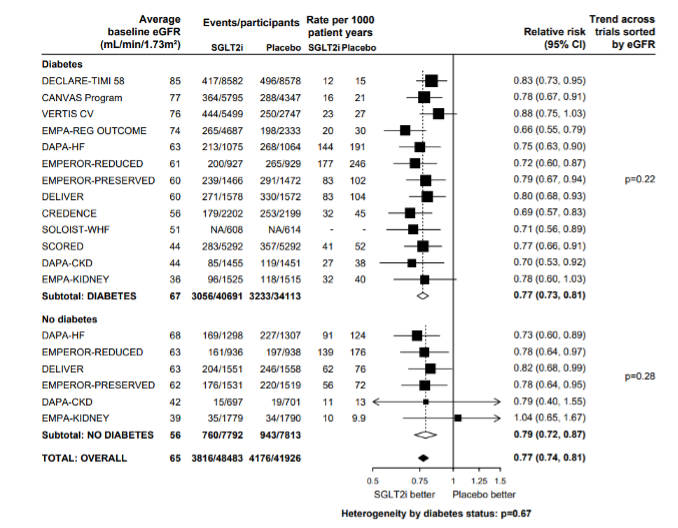
Excludes urgent heart failure visits. EMPA-REG OUTCOME cardiovascular death definition excluded stroke. CI = confidence interval; eGFR = estimated glomerular filtration rate; SGLT2i = sodium-glucose cotransporter-2 inhibitor.
Five large trials of SGLT-2 inhibition in heart failure populations have now reported, which together enrolled participants across the spectrum of left ventricular ejection fraction (LVEF). DAPA-HF and EMPEROR-REDUCED demonstrated consistent benefits of SGLT-2 inhibition in people with HFrEF, reducing cardiovascular death or worsening heart failure (including urgent visits in the case of DAPA-HF) by 26% and 25%, respectively (DAPA-HF: 386/2373 vs 502/2371, HR=0.74, 95%CI 0.65-0.85; EMPEROR-REDUCED: 361/1863 vs 462/1867, HR=0.75, 95%CI 0.65-0.86) (16, 41). In both trials, the beneficial effect of SGLT-2 inhibition was present irrespective of diabetes status or heart failure aetiology (16, 41). Subsequent data from EMPEROR-PRESERVED demonstrated a reduction in cardiovascular death or hospitalisation for heart failure of 21% (415/2997 vs 511/2991, HR=0.79, 95%CI 0.60-0.90) in participants with heart failure with preserved ejection fraction (HFpEF) treated with empagliflozin, compared to placebo (17). The efficacy of SGLT-2 inhibition in HFpEF was confirmed by the DELIVER trial, which demonstrated an 18% reduction in cardiovascular death or worsening heart failure among 6263 participants with heart failure with mildly reduced or preserved ejection fraction randomised to dapagliflozin or placebo (512/3131 vs 610/3132, HR=0.82, 95%CI 0.73-0.92) (2). The beneficial effects of SGLT-2 inhibition in terms of kidney function were present across the range of kidney function all of the in the above trials, which enrolled participants with eGFR down to 20 mL/min/1.73m2 in the EMPEROR trials, 25 mL/min/1.73m2 in DELIVER, and 30 mL/min/1.73m2 in DAPA-HF (13-15, 17).
SOLOIST-WHF tested the dual SGLT-1/-2 inhibitor sotagliflozin in people with recent hospitalisation for worsening heart failure. Sotagliflozin reduced the risk of the trial’s revised primary composite of cardiovascular death or total hospitalisations/urgent visits for heart failure by 33% (HR=0.67, 95%CI 0.52- 0.85). Benefits were observed irrespective of ejection fraction at recruitment, including those with an ejection fraction ≥50% (28). The use of SGLT-2 inhibition during admission for acute decompensated heart failure (ADHF) represents an area of current interest, and ongoing trials will further clarify the role of SGLT-2 inhibition for this indication. Section 7c discusses the role of SGLT-2 inhibition in ADHF in more detail.
Atherosclerotic cardiovascular disease
For major atherosclerotic/adverse cardiovascular events (MACE), meta-analysis of the key cardiovascular safety trials performed in people with type 2 DM show SGLT-2 inhibitors affords approximately a 10% relative risk reduction compared to placebo (42). Results for the MACE outcome from CREDENCE, DAPA-CKD and SCORED are also consistent with a similar-sized relative risk reduction (3, 4, 12), suggesting that the size of relative benefits on MACE are equivalent in people with CKD (Figure 2.7). Benefits on MACE result primarily from reduced risk of cardiovascular death and myocardial infarction with no clear effect on stroke (42).
Figure 2.7: Effects of SGLT-2 inhibitors on MACE by population and trial (3, 4, 12, 21, 29, 39, 40) (adapted from (43))
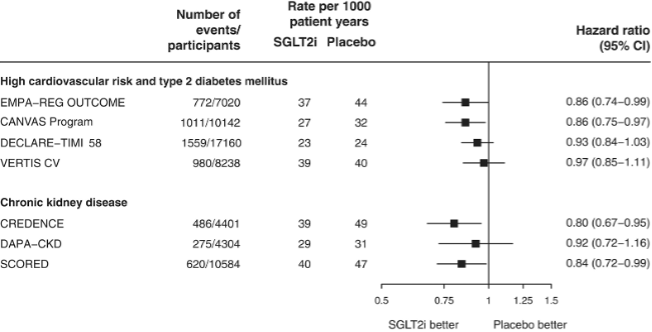
Effect of sodium–glucose co-transporter 2 inhibition on major atherosclerotic/adverse cardiovascular events (MACE), by population. MACE is a composite outcome including cardiovascular death, myocardial infarction or stroke. MACE results from heart failure population trials are unavailable. Rate of MACE was calculated from number of events and other information for SCORED. EMPA-REG OUTCOME also included unstable angina in the composite. VERTIS CV used a non-inferiority population. CI=confidence interval; SGLT2i=sodium–glucose co-transporter 2 inhibitor.
Following the publication of DECLARE-TIMI 58 results (21), it was hypothesised that relative reductions in MACE risk might be larger among people with prior atherosclerotic cardiovascular disease than individuals without (44). However, with the availability of more data from subsequent trials, the evidence of any effect modification by pre-existing disease is less convincing (42). Nevertheless, given the larger relative risk reductions for heart failure than MACE, it is plausible that any cardiovascular deaths which include chronic heart failure in the train of morbid events leading to death may be more likely to be prevented by SGLT-2 inhibition than deaths which are purely atherothrombotic in origin. Recent meta-analyses across different trial populations, including type 2 diabetes at high atherosclerotic cardiovascular risk, have demonstrated that SGLT-2 inhibition reduces the risk of cardiovascular death (11, 45). The totality of the evidence does not confirm benefits on non-cardiovascular death.
2.1.4 Benefits and risks of SGLT-2 inhibition in people with type 2 DM
The benefits of SGLT-2 inhibition in people with type 2 DM and CKD include reduction in the risk of progression of kidney disease, acute kidney injury, and cardiovascular death or hospitalisation for heart failure. However, recognised harms of SGLT-2 inhibition include complications particularly relevant to people with diabetes, including an increase in the risk of diabetic ketoacidosis (DKA), and a potential increase in the risk of lower limb amputation (11). Such medical complications are rare in the populations studied in the completed large placebo-controlled SGLT-2 inhibitor trials, and the estimated absolute benefits of SGLT-2 inhibition in studied individuals clearly outweigh the harms associated with DKA and amputation (Figure 2.8). Further detail regarding risks associated with SGLT-2 inhibition and related recommendations can be found in Section 5.
Figure 2.8: Absolute benefit and risks of SGLT-2 inhibition for people with CKD with and without diabetes, estimated from 13 large randomised clinical trials of SGLT-2 inhibition (adapted from (11))
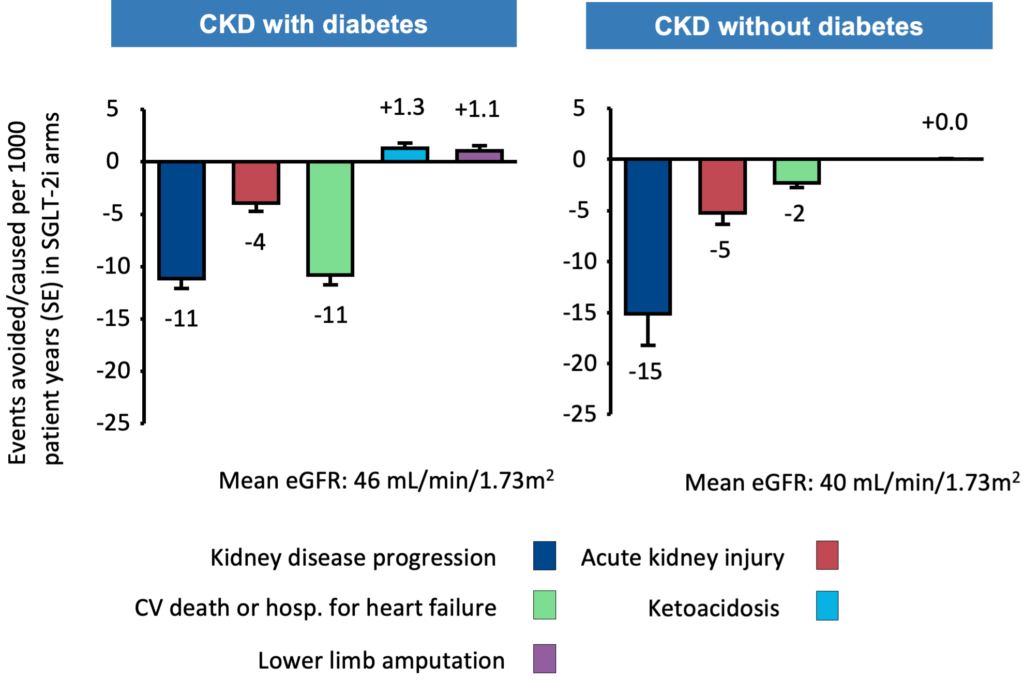
Negative numbers represent events avoided in SGLT-2 inhibitor arms, while positive numbers indicate events caused. CKD – chronic kidney disease. eGFR – estimated glomerular filtration rate. SE – standard error. SGLT-2i – sodium-glucose co-transporter 2 inhibitor.
2.1.5 Summary of trial evidence on glucose-lowering effects
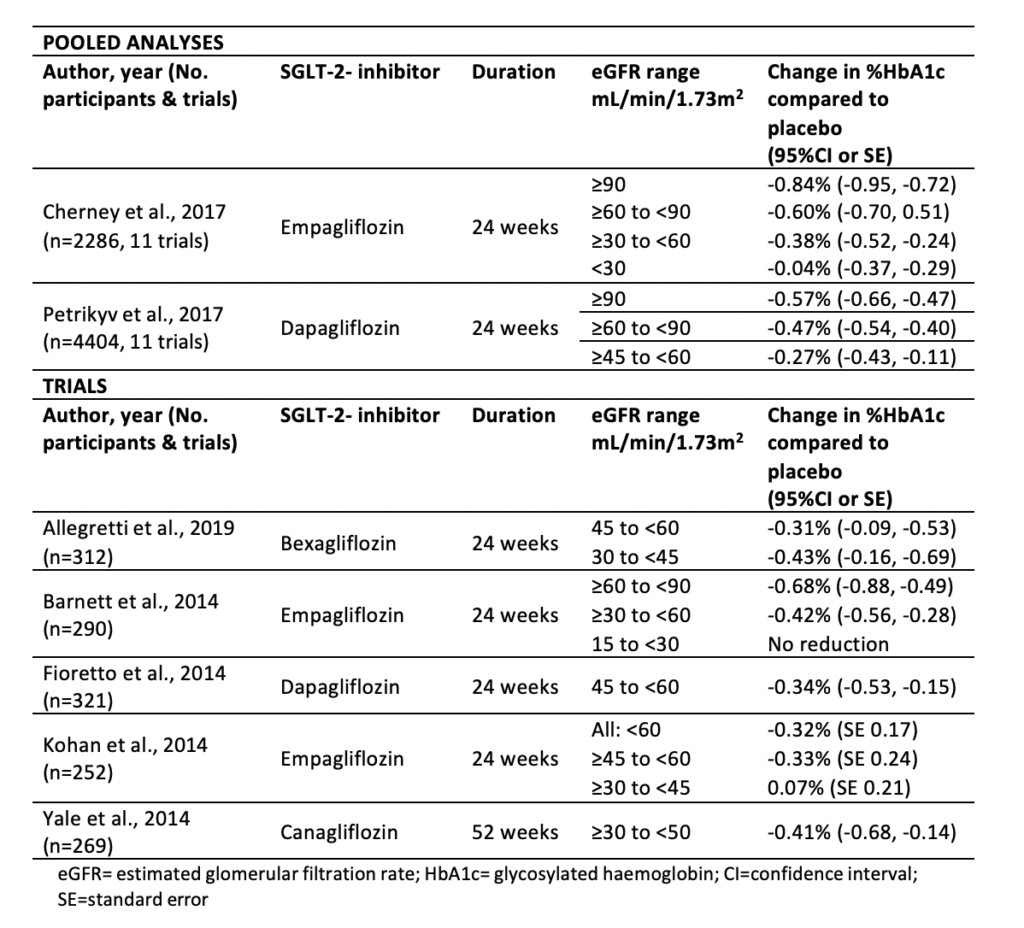
Two pooled analyses have evaluated the effects of SGLT-2 inhibitors on HbA1c by baseline eGFR (46, 47). Both sets of analyses indicate that at lower eGFRs, the effect of SGLT-2 inhibition on HbA1c are diminished, with no good evidence for a clinically meaningful reduction in HbA1c at eGFRs <30 mL/min/1.73m2. Despite this, there are still beneficial effects of SGLT-2 inhibition on blood pressure, weight and albuminuria at low eGFR. Table 2.2 also highlights several smaller randomised trials (48-52) which have reported similar findings with respect to HbA1c and eGFR, mirroring pharmacodynamics studies showing the linear reduction in measured urinary glucose excretion as eGFR falls (53). Analogous data exist from a trial in post-transplant DM, in which reductions in HbA1c were substantially attenuated, and arguably not clinically meaningful, in those with an eGFR <45 mL/min/1.73m2 (54) (see section 7b for more details). The large placebo-controlled trials of SGLT-2 inhibition in CKD have demonstrated the expected modest effects among people with diabetes, with estimated reductions in HbA1c attenuated at low eGFR to 0.31% (95%CI 0.26-0.37) in CREDENCE, 0.42% (95%CI 0.38-0.47) in SCORED, 0.1% (95%CI 0.0-0.2) in DAPA-CKD, and 0.08% (95%CI 0.15- -0.01) in EMPA-KIDNEY (1, 3, 12, 55). Section 5 of this guideline provides more detail on management of hypoglycaemic agents in people initiating SGLT-2 inhibition, and on the risks of hypoglycaemia.
Table 2.2: Randomised trial results assessing the effect of SGLT-2 inhibitors on %HbA1c reductions by level of kidney function (46-52)
ABCD-RA Clinical Practice Guidelines for Management of Hyperglycaemia in Adults with Diabetic Kidney Disease: 2021 Update
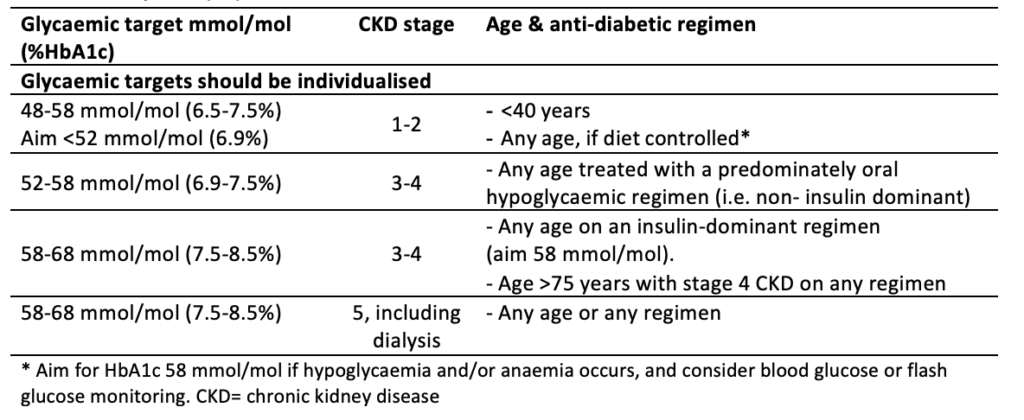
This SGLT-2 inhibitor guideline does not consider glycaemic targets, as the cardiac and kidney benefits of SGLT-2 inhibition appear to be preserved in those with CKD and an eGFR ≥20 mL/min/1.73m2 (1, 3, 4), despite their attenuated effect on blood glucose lowering in CKD (46). Nevertheless, we recognise that the care of people with diabetic kidney disease is often shared between nephrology and diabetes clinical teams, as highlighted by the 2021 joint ABCD-RA guideline: Clinical Practice Guidelines for Management of Hyperglycaemia in Adults with Diabetic Kidney Disease (56). We therefore provide a brief summary of the joint ABCD-RA’s considerations and recommendations in the text and Table 2.3 below.
The ABCD-RA guideline group recognised that early intensive diabetic management leads to reduction in risk of subsequent diabetic kidney disease. A meta-analysis of randomised trials has demonstrated that more intensive glycaemic control reduces the risk of a composite kidney outcome of ESKD, renal death, decline in eGFR to <30 mL/min/1.73m2 or development of macroalbuminuria (A3), by about 20% compared to more standard control (HR=0.80, 95%CI 0.72-0.88) (57). About two-thirds of this result constituted the albuminuria-based component of the composite, with more limited information available for the eGFR and ESKD-based components. This contrasts the quality of information available in kidney outcome trials of SGLT-2 inhibition, which had larger numbers of eGFR-based and kidney failure outcomes and larger relative risk reductions than the intensive glycaemic control trials (1, 3, 4).
The ABCD-RA group highlighted that there are challenges with respect to increased risk of hypoglycaemia (both treatment and kidney-related) and reliability of HbA1c monitoring required to achieve intensive glycaemic control in people with moderate-to-advanced CKD. They therefore provide glycaemic targets stratified by age, CKD stage and diabetic therapy to try and safely achieve tight glycaemic control targets in people with diabetic kidney disease.
Table 2.3: Summary of the glycaemic recommendations for people with type 2 DM and CKD adapted from the ABCD-RA clinical practice guidelines for management of hyperglycaemia in adults with diabetic kidney disease: 2021 update (56)
2.1.6 Quality of the evidence
For the large SGLT-2 inhibitor trials providing the majority of evidence underpinning our guidance, risk of bias is low, as assessed using the Cochrane Risk of Bias 2 (ROB2) tool. All trials employed strong randomization and blinding procedures, and compared efficacy to matching placebo. Intention-to-treat analyses were used (with modifications where appropriate for safety outcomes), and clearly-defined testing processes for secondary outcomes were used, minimising the risk of bias in all assessed domains. Their size and large number of outcomes enable precise estimates of treatment effect and ability to assess effects in subpopulations (particularly when the trials are combined in meta-analysis by diabetes status).
Although risk of bias was low across assessed ROB2 domains for included trials, potential small sources of bias remain. CREDENCE, DAPA-CKD and EMPA-KIDNEY were closed early, which may lead to over-estimation of the relative treatment effects (particularly where the data was locked shortly after interim review). However, point estimates for the kidney disease progression outcomes from the other completed trials of SGLT-2 inhibitors are broadly consistent with those identified in these trials. The key limitation of the trials was the short duration of follow-up for participants with low levels of albuminuria, meaning assessments of effects on CKD progression are limited to eGFR slope-based analyses in some groups. The two sotagliflozin trials (SCORED and SOLOIST-WHF) underwent modification of their primary assessments prior to unblinding (12, 28). Due to withdrawal of funding, both trials were also unable to complete endpoint adjudication, instead relying on investigator-reported events. In SOLOIST-WHF, 73% of events that were sent for adjudication matched the events reported by investigators (balanced between trial arms) (28).
2.1.7 Summary of published cost-effectiveness analyses
We identified two UK-specific cost-effectiveness analyses of SGLT-2 inhibition in CKD. The CREDEM-CKD group estimated UK-specific cost-effectiveness in diabetic kidney disease based on extrapolations from CREDENCE data (58). In their primary analysis, a gain of 0.28 quality-adjusted life years (QALYs) per individual treated with canagliflozin for 10 years was found. This benefit was determined primarily by longer survival in the canagliflozin arm and reduced progression through CKD stages. Cost-effectiveness was driven, in large part, by reduced need for dialysis. Canagliflozin was associated with overall cost savings of £4,706 per individual over the course of 10 years compared to placebo. Savings on reductions in cardiovascular risk were largely offset by greater costs due to longer survival.
A cost-effectiveness analysis conducted by the DAPA-CKD group modelled the cost-effectiveness of dapagliflozin use in CKD in health systems in the UK, Germany, and Spain using individual participant data from DAPA-CKD. Based on the UK-specific analysis, there was a predicted lifetime gain 0.82 QALYs (95% credible interval [CrI] 0.34-1.17), with a corresponding cost of £6,020/QALY (59). Individuals were predicted to spend more time in the eGFR range 89-15 mL/min/1.73m2, and to have a longer life expectancy. Increased costs were driven by drug acquisition costs and increased costs of CKD management (due to the greater life expectancy afforded by dapagliflozin), but were offset by reduction in hospitalisations for heart failure, abrupt declines in kidney function, and progression to kidney failure. Similar to the CREDEM-CKD analysis, analyses of fewer than 10 years duration demonstrated dominance of dapagliflozin over placebo (i.e. dapagliflozin was both less costly and more effective than placebo).